
Understanding the Press-On Nail Product
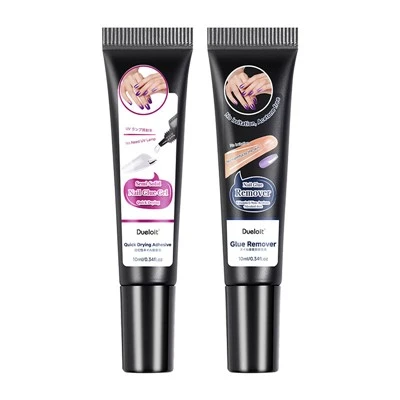
A press-on nail set normally consists of artificial nails in multiple sizes, allowing users to select the closest fit for their natural nails. Depending on the product design, a set may also include nail glue, adhesive tabs, a nail file, a wooden stick, alcohol wipes, or other application accessories.
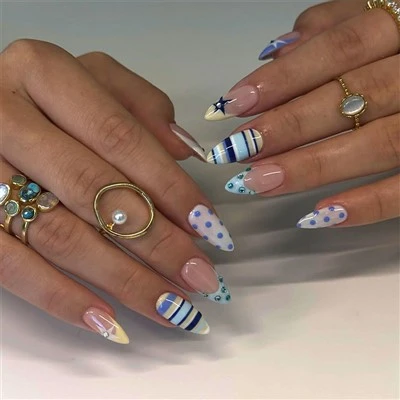
The appearance of a press-on nail is determined by several factors, including its shape, length, curvature, color, surface finish, and decorative technique. Popular shapes include almond, coffin, square, oval, and stiletto, while shorter natural shapes are also widely used for everyday styles.
For B2B product development, these specifications should be confirmed before production because changes to size, shape, or curvature can affect tooling and manufacturing requirements.
Materials and Nail Construction
Material selection has a direct influence on the appearance and physical characteristics of press-on nails. Plastic materials commonly used for artificial nails need to provide an appropriate balance of rigidity, flexibility, processing performance, and appearance.
The thickness of the nail is another important consideration. Very thin nails may provide a lightweight appearance, while thicker structures can create a different visual profile and handling experience. The ideal specification depends on the product style and target market.
Manufacturers may also use different surface treatments to create glossy, matte, metallic, chrome, cat-eye, or other finishes. For customized collections, material and coating specifications should be confirmed together with the design.
Nail Shapes and Sizing Systems
One of the technical challenges in press-on nail manufacturing is maintaining consistent sizing.
A complete set generally contains several nail sizes because natural nail widths vary from person to person. Manufacturers may offer standard sizing systems or develop customized size ranges for specific brands.
The curvature of the artificial nail is also important. Two nails with the same width can provide different visual results if their curvature differs. Therefore, professional product development should consider width, length, sidewall structure, curvature, and thickness together.
For wholesale projects, buyers should request a clear size chart and sample set before confirming large-scale production.
From Design to Finished Product
The manufacturing process can vary according to the complexity of the product, but a typical production workflow may involve several stages.
First, the nail shape and dimensions are established according to the product specification. The artificial nail is then formed and processed to achieve the required shape and surface.
After the basic nail structure is completed, color and decorative elements are applied. Simple products may use solid-color coatings or printed patterns, while more complicated designs can require multiple production and finishing steps.
The final stage includes inspection, sorting, set assembly, and packaging.
Complex nail art may involve additional manual processes. Hand-painted patterns, three-dimensional flowers, pearls, rhinestones, metallic decorations, and other elements can require skilled workers and additional quality checks.
Nail Art Technology
Design is one of the strongest differentiating factors in the press-on nail market.
Basic collections may focus on solid colors, French tips, gradients, or simple patterns. More fashion-oriented collections can include chrome finishes, magnetic cat-eye effects, marble patterns, glitter, abstract artwork, 3D decorations, and seasonal themes.
Different designs require different production techniques.
Printed artwork can provide consistent repeated patterns, while hand-painted designs allow greater flexibility for artistic details. Three-dimensional nail art requires additional attention to decoration placement and attachment because raised elements can be affected during packing, transportation, and application.
For this reason, buyers should consider not only whether a manufacturer can reproduce a design, but also whether the manufacturer has experience with the specific decorative technique required.
Custom Press-On Nails for Private Label Brands
Private-label production has become an important business model within the press-on nail industry. Instead of purchasing a standard product, brands can develop collections based on their own visual identity and target market.
Customization can involve many aspects of the product:
Nail shape and length
Nail color and finish
Artwork and decorative details
Nail sizing
Logo application
Product quantity per set
Application accessories
Packaging design
Printed inserts
Retail box structure
A professional custom project normally begins with a design concept or reference sample. The manufacturer evaluates the technical requirements and develops a sample for approval. Adjustments can then be made before mass production.
This sampling stage is particularly important for complex designs because colors, proportions, decorative placement, and packaging dimensions may need to be adjusted before production.
Packaging Development
Packaging is an important part of the press-on nail supply chain. It protects the product while also communicating the brand identity to consumers.
Standard packaging may use a simple box and inner tray, while private-label brands can develop custom structures such as drawer boxes, window boxes, gift boxes, or other retail formats.
Packaging should provide sufficient protection against movement, pressure, scratches, and decoration damage during transportation. At the same time, the structure should be practical for storage, shipping, and retail display.
For brands targeting different markets, packaging may also need to consider labeling requirements, language, product information, and barcode placement.
Quality Control in Press-On Nail Manufacturing
Consistent quality is essential when producing press-on nails in commercial quantities. Small differences between individual nails can become more noticeable when products are manufactured in large batches.
A quality-control process may examine:
Shape and size: Nails should correspond to the approved specifications.
Surface: The finished surface should be checked for visible defects, uneven coating, scratches, or unwanted particles.
Color: Color consistency should be maintained between individual nails and production batches.
Artwork: Printed or painted designs should be positioned according to the approved sample.
Decoration: 3D elements and other decorative components should be properly attached and positioned.
Set completeness: Each package should contain the correct number of nails and accessories.
Packaging: Boxes, trays, labels, and printed materials should be inspected before shipment.
For private-label orders, an approved pre-production sample can serve as an important reference for mass production and future repeat orders.
Factors Affecting Press-On Nail Cost
The cost of a press-on nail product is influenced by more than the basic nail material.
Product shape, size, nail length, number of colors, artwork complexity, finishing technique, decorative components, packaging structure, order quantity, and customization requirements can all affect the final cost.
A simple solid-color nail set generally requires fewer production steps than a product containing multiple layers, detailed artwork, or handmade 3D decorations.
Packaging can also represent a significant part of the overall product cost. A customized rigid box, special structure, or multiple printed components may require additional tooling and production processes.
Therefore, B2B buyers should compare manufacturers based on the complete product specification rather than unit price alone.
What Makes a Reliable Press-On Nail Manufacturer?
When selecting a manufacturer, buyers should evaluate several areas at the same time.
Production capability is important, but it should be considered together with design development, sampling, quality control, packaging, and communication.
A capable manufacturer should be able to clearly explain product specifications, provide samples for evaluation, communicate production requirements, and maintain reasonable consistency between batches.
For customized projects, buyers should also confirm whether the manufacturer can handle the complete process from nail development to packaging. Managing multiple suppliers for nails, decoration, accessories, and packaging may increase coordination complexity.
Future Development of the Press-On Nail Industry
The press-on nail market continues to develop toward greater product variety and customization. Consumers are increasingly exposed to nail designs through social media, e-commerce platforms, beauty creators, and seasonal fashion trends.
This creates opportunities for brands to develop smaller themed collections, limited-edition designs, customized packaging, and products targeted at specific consumer groups.
At the same time, manufacturers are expected to improve production consistency, decorative techniques, packaging solutions, and product development efficiency.
For B2B businesses, the ability to respond quickly to new design concepts while maintaining stable quality can become an important competitive factor.
Conclusion
The press-on nail industry is not simply a decorative beauty category. It involves product design, material selection, sizing technology, manufacturing processes, nail art techniques, packaging development, and quality management.
For wholesalers and private-label brands, understanding these factors makes it easier to evaluate suppliers and develop products that are suitable for their target markets.
A successful press-on nail collection requires more than an attractive design. Consistent sizing, reliable production, appropriate materials, accurate nail art, protective packaging, and effective quality control all contribute to the final product. As the industry continues to evolve, manufacturers that combine production expertise with flexible customization capabilities will be better positioned to support the changing needs of global beauty brands.